


Blogs
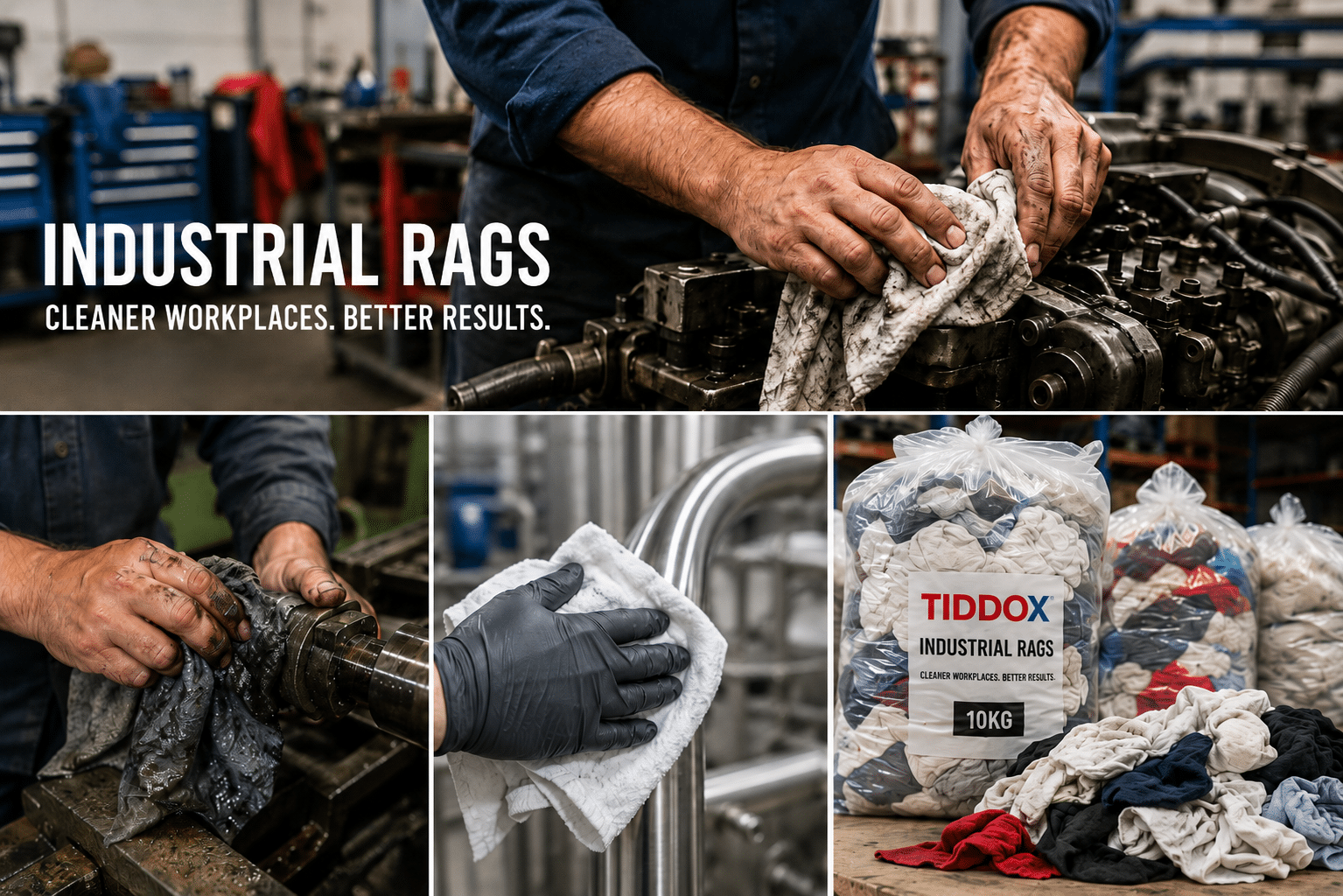
Industrial rags play an essential role in keeping workplaces clean, safe, and productive. From automotive workshops and engineering facilities to construction sites, manufacturing plants, and marine operations, industrial rags are used every day for wiping machinery, cleaning spills, polishing surfaces, and maintaining equipment.
Choosing the right industrial rags for your workplace can improve cleaning efficiency, reduce waste, minimise downtime, and help protect equipment and surfaces. However, many businesses simply purchase the cheapest option without understanding the differences between rag materials, absorbency, lint levels, and suitable applications.
This practical guide explains the most common types of industrial cleaning rags, where they are used, and how businesses can choose the correct cleaning rags for different workplace tasks.
What Are Industrial Rags?
Industrial rags are recycled clothing and textile materials that would otherwise end up in a landfill, repurposed into practical cleaning solutions for commercial and industrial workplaces. By converting used textiles into industrial wiping cloths, businesses help reduce textile waste, extend the life of existing materials, and support more sustainable cleaning practices.
Because clothing textiles are naturally durable, highly absorbent, soft, and non-abrasive, they make excellent cost-effective commercial cleaning rags for a wide range of applications. Reusable and highly effective at absorbing oils, grease, and fluids, industrial rags provide a soft, absorbent, and economical cleaning solution for many workplace cleaning tasks.
Their strength, absorbency, and versatility make them ideal for oil and grease removal, solvent wiping, machinery cleaning, equipment maintenance, and heavy-duty spill response across workshops, factories, engineering facilities, automotive businesses, and other industrial environments.
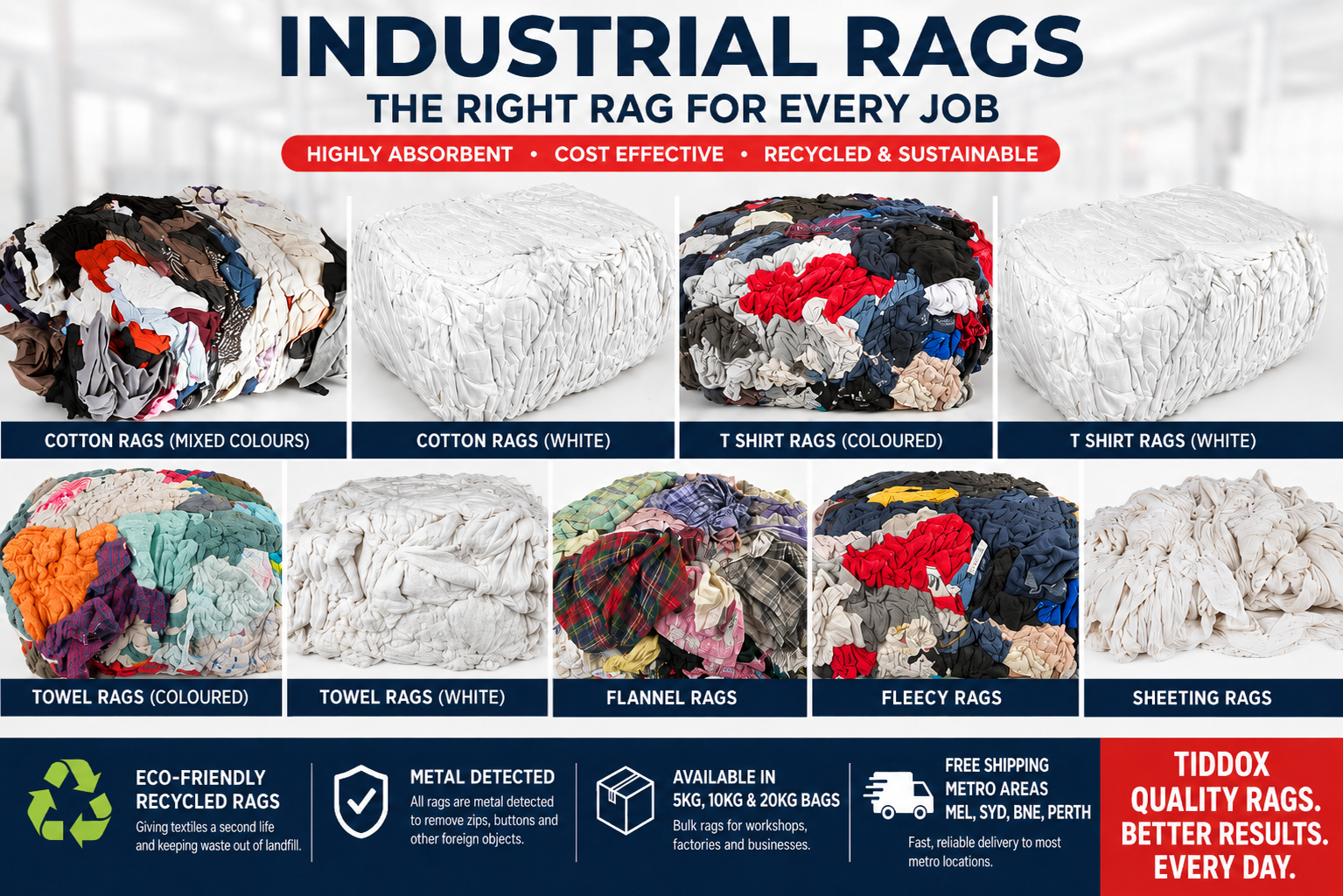
Industrial rags are commonly cut from discarded clothing materials such as cotton shirts, towels, t-shirts, sheets, flannel garments, and fleecy fabrics. These recycled rags are sorted, cut, processed, and metal-detected to ensure they are safe and suitable for workplace use.
Each type of cleaning rag serves a specific industrial or commercial purpose, depending on its absorbency, texture, and lint level.
- Cotton Rags: A popular entry-level general-purpose industrial wiping rag. These thin, low lint rags are cut from recycled cotton business shirts, cotton dresses, cotton sheets, and other cotton garments. Ideal for equipment cleaning and surface wiping, but not as thick and absorbent as t-shirt rags.
- T-Shirt Rags: The most popular all-purpose industrial rag cut from recycled t-shirts and singlets. They are soft, very absorbent, and cost-effective for a wide range of workshop cleaning tasks.
- Towel Rags: Widely regarded as one of the most absorbent industrial wiping rags, these thick, heavy-duty rags are cut from recycled bath towels, robes, and toweling materials. They are ideal for cleaning heavy liquid spills, floor cleanup, and general heavy-duty scrubbing.
- Flannel Rags: Soft polishing rag cut from recycled flannel shirts, pyjamas, and cotton flannel garments. Preferred for polishing and finishing applications.
- Fleecy Rags: A very absorbent rag cut from recycled fleecy garments such as sweatshirts and tracksuits. Suited to heavy-duty industrial cleaning, oil absorption, and industrial clean-ups.
- Sheeting / Linen Rags: Ultra-low lint, tightly woven white rag cut from recycled hotel linen and hospital bedsheets. Ideal for polishing, fine finishing, window cleaning, and solvent-based cleaning tasks.
Applications, Features and Uses of the Different Types of Industrial Rags
Different rag materials offer different benefits. Some are better for absorbing oil and grease, while others are better for polishing or lint-sensitive cleaning tasks. The table below provides a practical comparison of the most common industrial rags, wiping rags, and workplace cleaning rags used across workplaces.
| Type of Rag | Description | Key Features | Common Uses & Applications | Suitable Industries |
| Cotton Rags (Coloured) |
Thin, economical general-purpose cleaning rag cut from recycled cotton shirts, dresses, sheets, and garments. Popular entry-level industrial wiping rag. | • Cost-effective • Soft and non-abrasive • Low lint • Lightweight and flexible |
• General workshop cleaning • Wiping tools and machinery • Cleaning grease, oils and fluids • Spill clean up • Hand wiping • Glass cleaning |
• Automotive workshops • Manufacturing facilities • Engineering workshops • Mining operations • Marine industries • Transport depots • Fabrication |
| Cotton Rags (White) |
White cotton rag cut from recycled white cotton shirts, sheets, dresses, and other white cotton garments. Preferred where colour contrast and solvent compatibility are important. | • Low lint • No dye bleed • Soft texture • Solvent compatible • Excellent polishing cloth |
• Solvent and thinner wiping • Paint preparation • Polishing surfaces • Printing press cleaning • Absorbs chemicals and paint |
• Painting contractors • Printing and screen printing • Automotive refinishing • Industrial maintenance • Cabinet maker |
| T-Shirt Rags (Coloured |
Most popular all-purpose industrial rag cut from recycled t-shirts and singlets. Extremely versatile for commercial and workshop cleaning. | • Highly absorbent • Soft knit fabric • Durable • Economical |
• Cleaning machinery • Oil and grease wiping • Spill absorption • Surface polishing • Automotive detailing |
• Automotive • Marine • Aviation • Engineering • Manufacturing • Powder coating • Plumbing |
| T-Shirt Rags (White) |
Premium low lint wiping rag cut from recycled white cotton t-shirts and singlets. Commonly used where colour contrast solvent compatibility is important. | • Premium quality • Very low lint • Soft and absorbent • No colour bleed • Solvent resistant |
• Solvent wiping • Surface finishing • Polishing and detailing • Ink and paint clean up |
• Printing • Automotive detailing • Construction • Marine engineering • Hydraulics • Furniture manufacturing |
| Towel Rags (Coloured) |
Thick, heavy-duty absorbent rag cut from recycled bath towels, robes, and towelling materials. One of the best performing industrial rags. | • Extremely absorbent • Thick and durable • Long-lasting • Soft texture |
• Absorbing oil and water spills • Heavy-duty wiping • Cleaning thick liquids • Drying surfaces |
• Contract cleaners • Automotive workshops • Marine maintenance • Restaurants and hospitality • Heavy industry |
| Towel Rags (White) |
Premium white toweling rag cut from recycled white bath towels and robes. Superior absorbency is preferred where contamination or dye transfer must be avoided. | • Superior absorbency • Premium quality • Thick and durable • Soft and low lint |
• Large spill clean up • Equipment drying • Cleaning sensitive surfaces • Industrial maintenance |
• Janitorial services • Marine industry • Mechanical workshops • Hospitality • Painting contractors |
| Flannel Rags | Soft polishing rag cut from recycled flannel shirts, pyjamas, and cotton flannel garments. Preferred for polishing and finishing tasks. | • Soft and non-abrasive • Highly absorbent • Low lint • Excellent polishing cloth |
• Polishing metal surfaces • Automotive detailing • Furniture polishing • Waxing and finishing |
• Automotive detailing • Furniture manufacturing • Metal polishing • Panel beating |
| Fleecy Rags | A very absorbent rag cut from recycled fleecy garments such as sweatshirts and tracksuits. Suited to heavy-duty industrial cleaning. | • Very absorbent • Durable construction • Dual surface texture • Low lint performance |
• Heavy-duty cleaning • Grease and oil wiping • Cement and grime removal • Machinery wiping |
• Mining and heavy industry • Engineering • Oil and gas • Machine shops • Automotive |
| Sheeting Rags |
Ultra low lint white rag cut from recycled hotel linen and cotton sheeting. Ideal for polishing and solvent-based cleaning tasks. | • Ultra low lint • Soft and lightweight • High absorbency • No colour transfer |
• Glass and mirror cleaning • Metal polishing • Solvent wiping • Surface preparation |
• Hospitality maintenance • Printing • Painting and decorating • Automotive refinishing • Manufacturing |
Choosing the Right Industrial Rags for Your Workplace
Selecting the right industrial cleaning rags depends on the type of cleaning task, the materials being handled, and the surfaces being cleaned.
| Application | Comments | Best Rag Options |
| Oil and Grease Cleaning | Workshops, mechanical services, and industrial facilities working with machinery, engines, and heavy equipment require highly absorbent rags capable of handling thick oils, grease, and industrial fluids. Use an oil-absorbent t-shirt, towel, and fleecy cleaning rags. | • T-shirt rags • Towel rags • Fleecy rags |
| Solvent and Paint Applications | Painters, printers, and automotive refinishers often prefer white rags because they are low lint and do not bleed dye onto surfaces during cleaning. White cotton, t-shirt, and sheeting rags show up colour contrast and are widely used with solvents, thinners, inks, and paints. | • White cotton rags • White t-shirt rags • Sheeting rags |
| Polishing and Delicate Surfaces | Flannel, cotton, and sheeting rags are soft and will not scratch delicate surfaces, so ideal for polishing metal, cleaning glass, detailing painted surfaces, and fine finishing work. | • Flannel rags • White cotton rags • Sheeting rags |
| Heavy Duty Industrial Cleaning | When heavy-duty cleaning tasks involve dirt, grease, grime, and industrial fluids, towel rags, fleecy rags, and cotton rags provide an absorbent and durable solution for machinery maintenance, workshop cleaning, and industrial wipe downs | • Towel rags • Fleecy rags • Mixed cotton rags |
| Printing & Equipment Cleaning | Printers use industrial wiping cloths to clean presses, rollers, ink trays, and tools while removing inks, solvents, and grease during production. White cotton, t-shirt, and sheeting rags are preferred because they are low lint, highly absorbent, and do not bleed colour onto equipment or printed materials. | • White cotton rags • White t-shirt rags • Sheeting rags |
Why Australian Businesses Choose TIDDOX
As one of Australia’s trusted industrial rags suppliers, TIDDOX supplies a wide range of industrial rags and cleaning cloths
designed for demanding workplace environments.
TIDDOX supplies bulk rags nationwide in convenient 5kg, 10kg, and 20kg bag options suitable for workshops, factories, and commercial facilities. Buying rags in bulk from TIDDOX helps businesses reduce costs, improve efficiency, and maintain a reliable supply of cleaning materials for everyday cleaning, maintenance, and spill response tasks. Whether purchasing a single bag of rags or pallet quantities, TIDDOX helps businesses maintain reliable access to quality workplace cleaning rags
All our rags are metal-detected and safe to use, and with warehouses across NSW, VIC, QLD, and WA offering free metro delivery, sourcing premium quality, competitively priced industrial rags has never been easier. Contact the TIDDOX team today.

PP vs SMS vs Microporous Coveralls: Which Is Right for Your Cleanroom?
Why Are Coveralls Worn in Cleanrooms? What Is the Difference Between PP, SMS and Microporous Coveralls? Feature Polypropylene (PP) SMS
Industrial Rags: A Practical Guide for Workplaces
What Are Industrial Rags? Applications, Features and Uses of the Different Types of Industrial Rags Type of Rag Description Key